

Please wait while we load the content
Empowering traders through cutting-edge education and premium broker partnerships. Join thousands of successful traders worldwide.
© 2025 Bloomvest. All rights reserved. Empowering traders worldwide.
Made by BirthGiver .
© 2025 Bloomvest. All rights reserved. Empowering traders worldwide.
Made by BirthGiver .
Blogs
correlation-and-hidden-risk
4 minutes
Correlation and Hidden Risk — When 3 Trades Are Really Just 1
Some traders open multiple positions at the same time and think they’re “diversifying.” But in many cases, they’re doing the opposite. They’re multiplying risk just with different names on the chart. This is where correlation matters.
Correlation means two assets often move together (not always, but frequently). In crypto, when Bitcoin makes a strong move, many altcoins react in the same direction. In forex, certain pairs can behave similarly because of shared currencies or related economic factors. You don’t need advanced math to benefit from this. You just need to understand one idea: many trades are not truly independent.
How Hidden Risk Happens Imagine this:
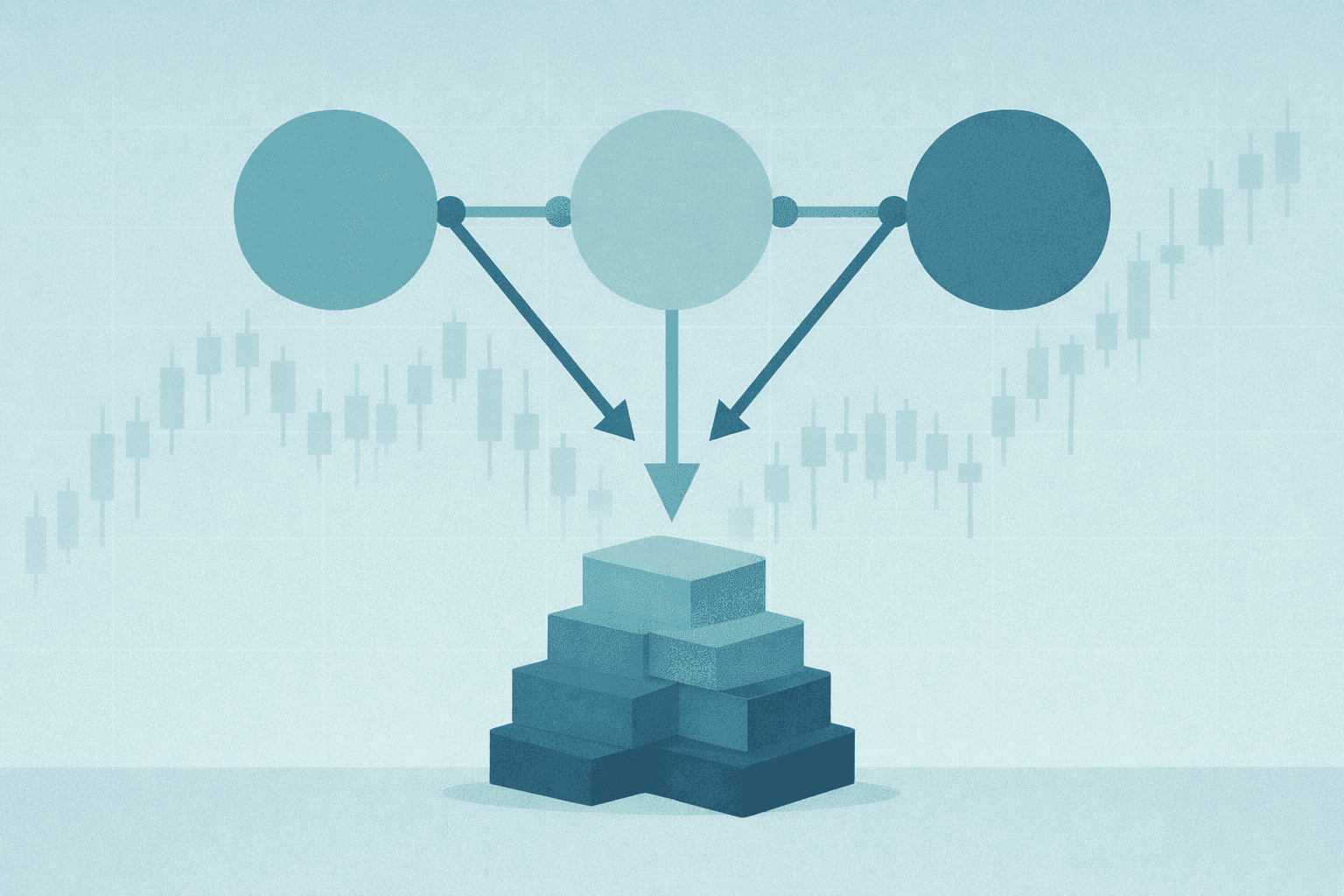
It looks like three different trades. But your core idea is basically one: “The crypto market will go up.” If the market drops, all three positions can lose together. Instead of spreading risk, you’ve stacked risk.
Even if you risk 1% on each position, your real exposure might be closer to 3%—and it can hit you all at once. This can also increase emotional pressure, which leads to worse decisions: revenge trading, closing too early, or breaking your rules.
A Simple Beginner Rule If your positions are likely to move together, treat them as one “family.” Then choose one of these actions:
Before opening a second or third trade, ask: “If the overall market moves against me, will all of these lose together?” If the answer is yes, you’re creating hidden risk.
Final Thought Correlation is easy to ignore when things are going well. But on a bad day, it can create multiple losses at the same time. Sometimes the smarter move isn’t trading more—it’s trading fewer, higher-quality positions with clearer risk.
