

Please wait while we load the content
Empowering traders through cutting-edge education and premium broker partnerships. Join thousands of successful traders worldwide.
© 2025 Bloomvest. All rights reserved. Empowering traders worldwide.
Made by BirthGiver .
© 2025 Bloomvest. All rights reserved. Empowering traders worldwide.
Made by BirthGiver .
Blogs
timeframes-and-common-mental-mistakes
9 minutes
Multi-Timeframe Analysis: Seeing the Market from Above
Multi-timeframe analysis is about looking at the market from different time perspectives to get a clearer picture of price movement. One common mistake among new traders is focusing on a single timeframe; for example, only the 15-minute or only the 1-hour chart. This narrow view hides the bigger direction of the market. Experienced traders start from higher timeframes and work their way down. This approach is known as top-down analysis.
In this method, higher timeframes like the Daily or 4H chart are used to identify the overall direction of the market; whether price is trending up or down. Then the trader moves to lower timeframes such as the 1H or 15M chart to find a precise entry point. In simple terms: the higher timeframe shows the path, and the lower timeframe shows where to step onto it.
For example, if the Daily chart of EUR/USD is in an uptrend but the 15-minute chart is showing a pullback, a skilled trader will wait for the pullback to finish and then join the main uptrend. They won’t sell blindly just because a short-term correction appears.
A practical guideline is to monitor three timeframes at the same time: one for the overall direction, one for the current structure, and one for confirming the entry. This combination gives a balance between a wide view and accurate timing.
Mental Biases That Cost Traders More Than They Expect
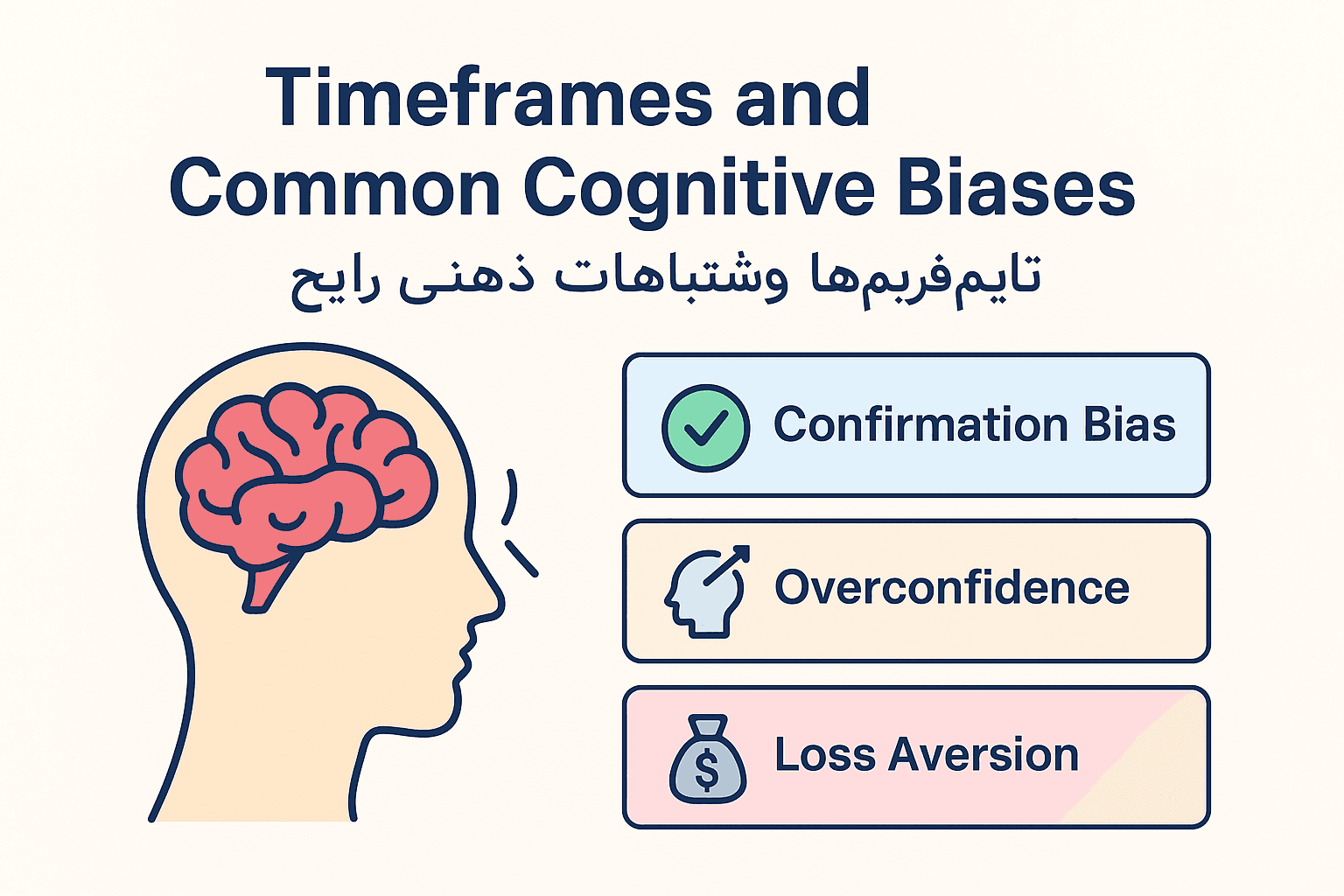
The human mind is built for survival, not for trading. That’s why traders often fall into cognitive biases mental shortcuts that seem logical at first but lead to poor decisions in the market.
One of the most common biases is ** Confirmation Bias**. This happens when a trader pays attention only to the information that supports their existing belief. If someone thinks Bitcoin is going to rise, they start looking only for bullish signals and ignore anything that suggests a downturn. This selective attention usually ends in heavy losses.
Another dangerous bias is Overconfidence. After a few successful trades, the mind begins to feel powerful and believes it can predict what comes next. But the market has a way of teaching tough lessons to traders who place too much trust in their own forecasts.
There’s also Loss Aversion, the tendency to avoid accepting a loss. Instead of closing a bad position, the trader waits and hopes the price will return, just to avoid the feeling of being wrong. In most cases, this waiting only makes the loss larger and harder to control.
