

Please wait while we load the content
Empowering traders through cutting-edge education and premium broker partnerships. Join thousands of successful traders worldwide.
© 2025 Bloomvest. All rights reserved. Empowering traders worldwide.
Made by BirthGiver .
© 2025 Bloomvest. All rights reserved. Empowering traders worldwide.
Made by BirthGiver .
Blogs
trade-execution-spread-slippage-order-types
5 minutes
Trade Execution Basics Spread, Slippage, and Order Types (Simple Guide)
Many traders focus on analysis and ignore execution. But execution is where real results are created. Execution means how you place an order, what price you actually get filled at, and what hidden costs you pay. If you don’t understand execution, even a good chart setup can turn into a bad trade in practice.
What Is Spread?
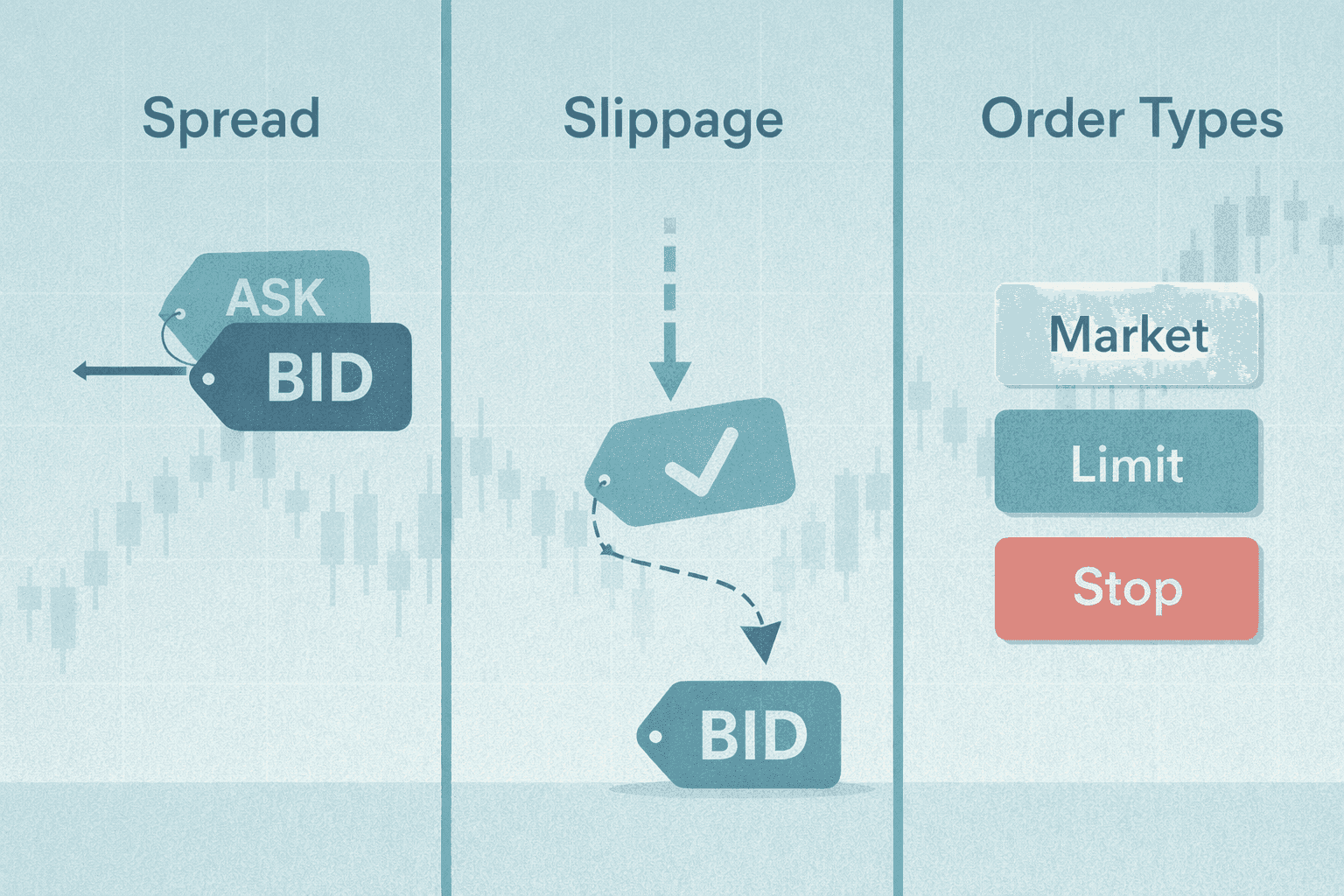
The spread is the difference between the buy price and the sell price. It’s basically a built-in cost. The moment you enter, you start slightly negative because you’re crossing that gap.
Spread is always there, but it can widen during certain conditions like low-liquidity hours, session changes, or high-impact news. A wider spread can trigger your stop loss earlier than expected, or reduce your profit even if price moves in your direction.
What Is Slippage?
Slippage happens when you try to enter (or exit) at a certain price, but your order gets filled at a worse price. This is common when the market is moving fast or liquidity is thin especially around major news events. Many traders think they entered “exactly” at their level, but the fill tells a different story.
The Main Order Types (Beginner-Friendly)
A Note on Leverage in Crypto Leverage multiplies both profit and loss. That means small moves can have big effects, especially in volatile markets. This isn’t about fear it’s about mechanics. If you combine high leverage with poor execution (wide spreads, slippage, bad timing), trades can go wrong very quickly.
Final Thought Good trading isn’t only about reading charts. Execution order choice, timing, spread awareness, and slippage awareness can improve results even if you never change your strategy. Clean execution is one of the easiest “upgrades” a beginner can make.
